
More in Politics
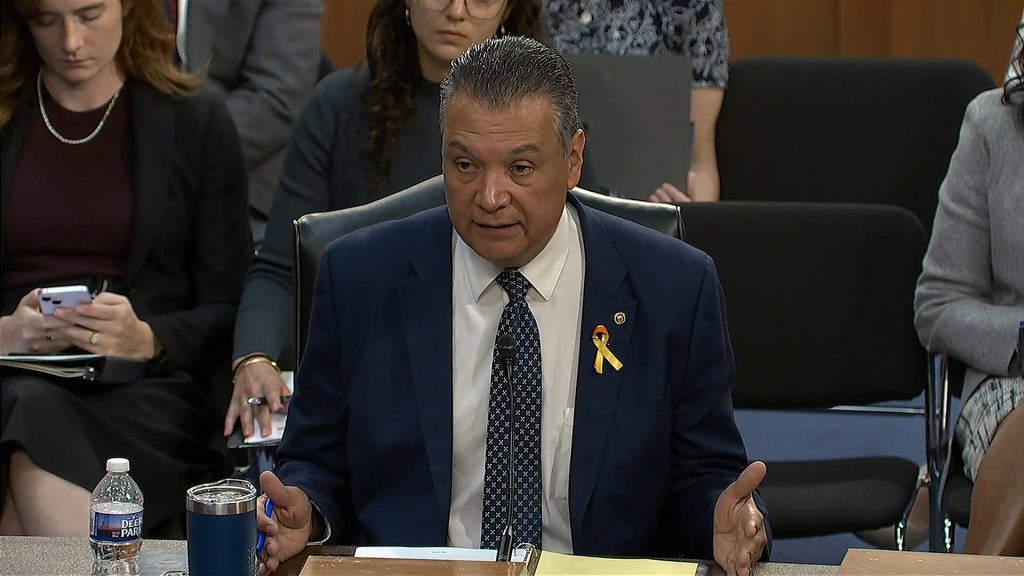
Justice System Gains Public Confidence Following High-Profile Trafficking Conviction
Odiongan Councilor Kaila Yap expressed renewed public confidence in the justice system after the trafficking conviction of former Bamban Mayor Alice Guo. Yap attributed this positive development to the efforts of Senator Risa Hontiveros, who spearheaded the Senate investigation into Guo's involvement with a Philippine offshore gaming operator (POGO) hub that was subsequently raided. In a public message shared on Facebook, Councilor Yap extended her gratitude to Hontiveros, stating, \"Thank you, SenRi! We now have trust in the justice system because of you! There\'s hope!\" Hontiveros\' leadership during the Senate inquiry played a crucial role in uncovering the connection between Guo and the illegal activities, leading to the successful trafficking charges and conviction. This case has become a notable example of accountability and transparency in governance, reinforcing public trust in legal institutions.
Politics
|1 min read

House Panel Approves Creation of Balikbayani Centers to Support Returning OFWs
The House Committee on Overseas Workers Affairs has given its approval to a proposal establishing Balikbayani Centers—integrated service hubs dedicated to assisting Overseas Filipino Workers (OFWs) upon their return. Authored by Albay Representative Raymond Adrian Salceda, the initiative is set to become a crucial element of the forthcoming Magna Carta for OFWs. The centers aim to streamline access to government programs by co-locating key agencies such as the Overseas Workers Welfare Administration (OWWA), Department of Migrant Workers (DMW), Department of Social Welfare and Development (DSWD), Department of Labor and Employment (DOLE), Technical Education and Skills Development Authority (TESDA), Department of Trade and Industry (DTI), and Department of Health (DOH). Balikbayani Centers will be established in every region nationwide, with special emergency units positioned at major ports of entry including the Ninoy Aquino International Airport (NAIA), Mactan-Cebu International Airport, and Davao International Airport. These facilities will provide returning OFWs and their dependents with access to livelihood assistance, skills training, psychosocial support, medical care, and urgent emergency services—all under one roof. Representative Salceda highlighted the importance of the bill, stating, \"This legislation is about dignity. The moment an OFW steps back into the country, government support should be immediately available. Reintegration isn’t something to be considered later. The Balikbayani Center will serve as a dedicated one-stop shop for all their needs.\" He also stressed that the measure does not introduce new bureaucratic layers but rather enhances coordination by consolidating existing services, aligning it with the government’s streamlining efforts for greater efficiency. \"It’s a very affordable solution that coordinates existing resources. Even prior to enactment, the Department of Migrant Workers can begin implementing this plan,\" Salceda added. Concluding, he affirmed the commitment behind the proposal: \"Every OFW deserves a well-organized, dignified, and compassionate homecoming. Integrating the Balikbayani Center Act into the Magna Carta for OFWs turns this promise into reality.\"
Politics
|2 min read
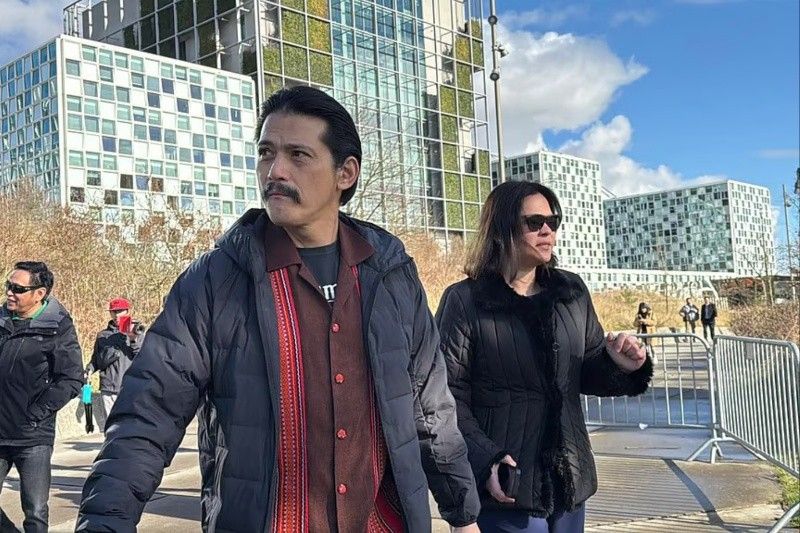
Senator Robin Padilla Calls for Senate Probe into PCO Over Alleged Misinformation
Senator Robin Padilla has initiated a resolution urging the Senate to conduct an investigation into the Presidential Communications Office (PCO) for reportedly circulating unverified and potentially misleading information. According to Padilla, the inquiry seeks to address recurring communication failures by the PCO that have resulted in public confusion and misconceptions surrounding government policies and actions. Padilla criticized the PCO’s communication approach, describing it as frequently adversarial, overly rhetorical, and lacking clarity grounded in factual data. He highlighted specific concerns regarding PCO Undersecretary Claire Castro’s media appearances, accusing her of evading questions, obstructing reporters, and disseminating propaganda. The resolution was filed in the wake of a tense Senate budget session where Padilla presented an unverified audio clip, which some believe was artificially generated, allegedly capturing Castro insulting a government social media operative. In the recording, the woman thought to be Castro called the troll “stupid,” prompting the troll to resign and warn that the exchange was being recorded. The audio concludes with the woman uttering an expletive. Castro has since denied that the voice in the clip is hers. Senate President Vicente Sotto III intervened during the session, advising Padilla against dragging the Senate into the issue and recommending that he coordinate with the National Bureau of Investigation instead. Sotto remarked, “It’s unfair for her if you mention her name here. I will give you an advice from Denzel Washington: \"If you don’t listen to the news, you’re uninformed. If you listen to the news, you’re misinformed!\"” Meanwhile, Castro urged Padilla to avoid falling prey to misinformation himself, noting his authorship of legislation penalizing troll farms. In response, Padilla, who chairs the Senate Committee on Public Information and Mass Media, defended his conduct on social media. He emphasized that holding public information officials accountable is part of his official duties, stating, “Chairman po ako ng Senate on public information and mass media, trabaho ko po ang tanongin kayo na nasa public information hindi akusahan, kanya kanya po tayong mandato kaya wag po ninyo ako paandaran ng mga pasakalye niyo.”
Politics
|2 min read
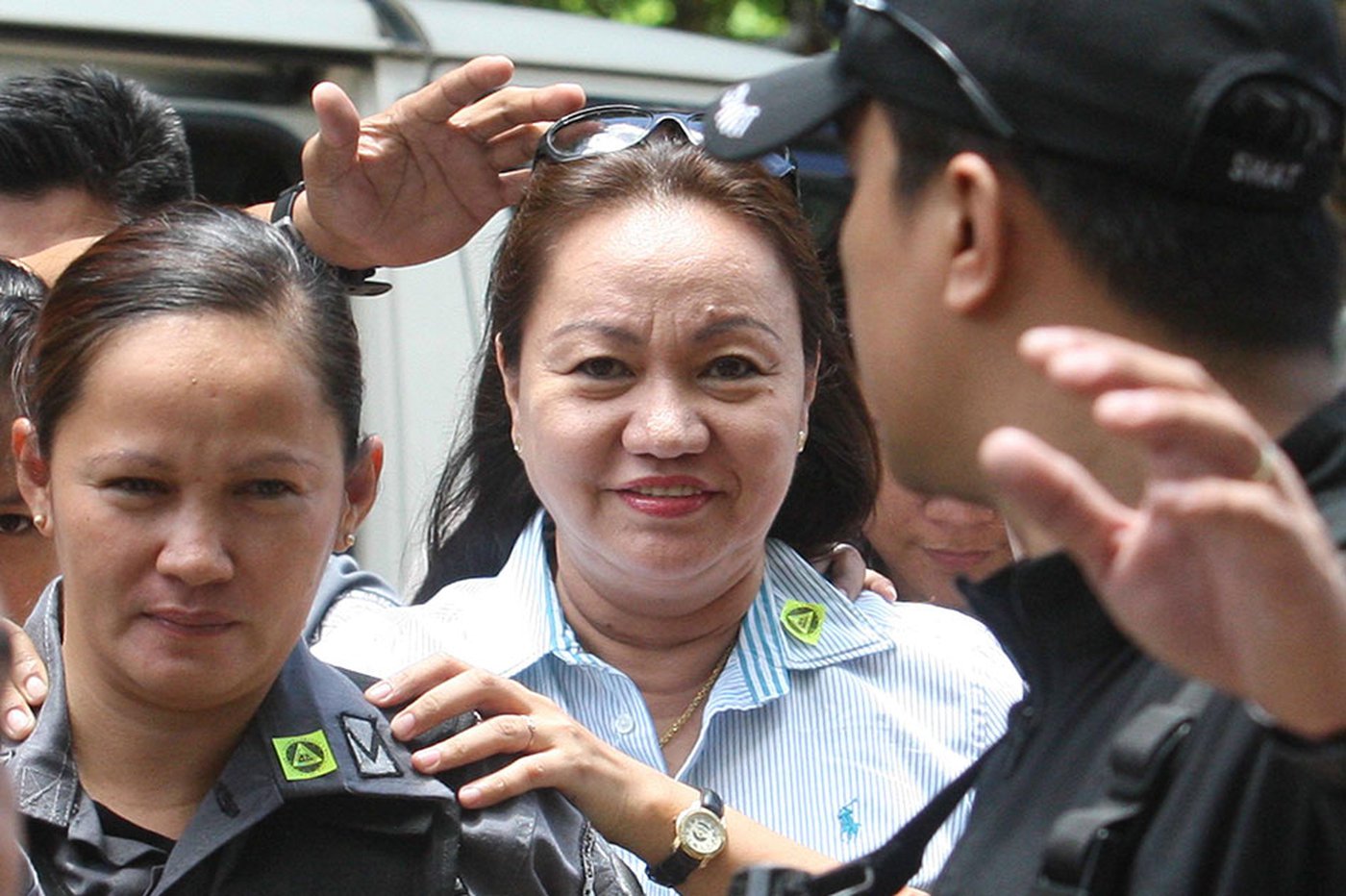
Warrant Issued for Porac Mayor Jaime Capil Over Illegal Offshore Gaming Charges
The legal predicament of Porac, Pampanga Mayor Jaime Capil intensified after the Regional Trial Court (RTC) Branch 265 in Pasig City issued an arrest warrant against him. The issuance follows investigations into the illegal offshore gaming hub "Lucky South 99," raided in Porac. Capil faces seven counts of violating the Anti-Graft and Corrupt Practices Act, specifically Sections 3(e) and 3(j) of Republic Act 3019. The warrant, dated November 28, 2025, instructs authorities to apprehend the mayor at the Porac Municipal Hall or any other location where he might be found, and to bring him before the court. The court has set bail at ₱90,000 covering all charges, payable via cash deposit or corporate surety. In line with Supreme Court protocols, the arrest execution will require the use of body-worn cameras and alternative recording devices. These charges arise from a large illegal Philippine Offshore Gaming Operator (POGO) facility uncovered in Porac. Earlier, in April, the Office of the Ombudsman had already deemed Capil guilty of gross neglect of duty — ordering his dismissal from public office, forfeiture of retirement benefits, and imposing a lifetime ban from holding government positions. Nonetheless, Capil was re-elected as mayor during the May 2025 elections, despite facing these allegations. The cases were filed by the Presidential Anti-Organized Crime Commission (PAOCC) and the Criminal Investigation and Detection Group (CIDG), following extensive raids on the illicit gaming operation. The PAOCC continues to crackdown on local officials believed to be involved in unauthorized POGO activities nationwide.
Politics
|2 min read
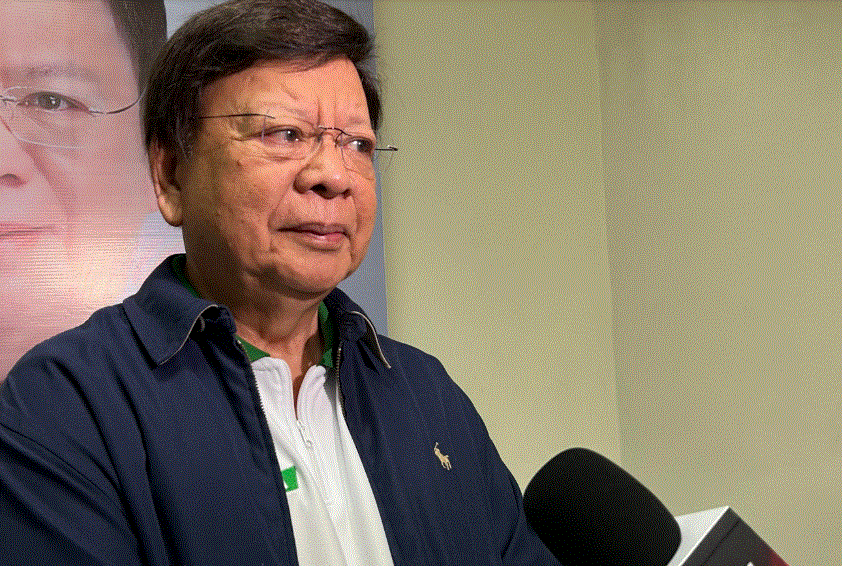
Senator Rodante Marcoleta Faces Election Offense Complaint Over Undeclared Campaign Donations
A formal election offense complaint has been filed against Senator Rodante Marcoleta for purportedly misrepresenting his campaign contributions in his Statement of Contributions and Expenditures (Soce) during the May 2025 polls. The seven-page complaint was lodged with the Commission on Elections (Comelec) on December 5, 2025, by Danilo Arao, lead convener of Kontra Daya, along with the Advocates of Public Interest Law. Arao stated, \"We filed complaints against Sen. Rodante Marcoleta today (December 5) because of his willful and deliberate falsehood in filling out the Statement of Contributions and Expenditures.\" He further emphasized that such actions are both unlawful and unethical for a public official, insisting that Marcoleta must be held accountable. The complaint highlights violations of Sections 98 and 107 of the Omnibus Election Code (OEC). Section 98 prohibits any person from making a contribution under a name other than their own, and mandates that candidates record contributions only under the actual contributor\'s name. Section 107 requires candidates to submit a complete, truthful, and detailed Soce related to the election. According to the complaint, \"There is probable cause to believe that the respondent committed an election offense by knowingly omitting the names of his campaign donors and intentionally misrepresenting that he received no contributions.\" The allegation continues that Marcoleta publicly acknowledged receiving donations but deliberately declared zero contributions in his Soce, in direct violation of the specified OEC provisions. In his submitted Soce, Marcoleta declared zero Philippine pesos in contributions while reporting campaign expenditures totaling ₱112,857,951.44. Questions arose over this discrepancy since his Statement of Assets, Liabilities, and Net Worth (SALN) reflected a net worth of only ₱51.9 million. Marcoleta defended his position by stating that his friends had financially supported his campaign but he refrained from declaring these donations to respect their wish for anonymity. The Commission on Elections is expected to investigate the allegations, which if proven, could result in sanctions or penalties under election law.
Politics
|2 min read

Supreme Court Dismisses and Disbars Judge Convicted of Murdering Fellow Magistrate
The Supreme Court (SC) has officially removed and disbarred Presiding Judge Oscar Tomarong of the Regional Trial Court (RTC) Branch 28 in Liloy, Zamboanga del Norte following his conviction for the murder of a fellow magistrate. The SC Office of the Spokesperson announced on Tuesday, December 23, that the SC En Banc issued a ruling ordering Tomarong's dismissal from service, forfeiture of retirement benefits, disbarment from legal practice, and permanent disqualification from government employment. The court emphasized that "murder is a crime involving moral turpitude, a serious offense that warrants dismissal under the Rules of Court." Further, the ruling underscored that "no one, not even members of the Bench, is above the law. Judges are embodiment of law and justice... The judiciary's task of maintaining the people's trust is undermined whenever judges neglect their duties, and worse, violate the laws that they are supposed to uphold. This case is the Court's proof of its commitment to the public that no judge who callously breaches the law and perpetrates an injustice will go unpunished." The decision follows a 2022 RTC verdict finding Tomarong guilty of orchestrating the murder of Judge Reymar Lacaya, who was fatally shot on May 9, 2019, outside the Liloy RTC building. During the criminal proceedings, Tomarong's aide, Juliber Cabating, testified that Tomarong directed him to hire assassins to carry out the killing. Cabating further revealed that Tomarong paid the hired gunmen P250,000 as payment for the crime.
Politics
|2 min read
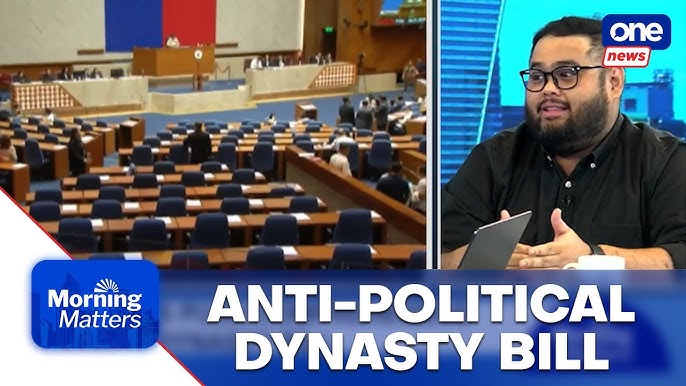
Contrasting Approaches to Anti-Dynasty Legislation Highlight Challenges in Political Reform
Two competing anti-dynasty bills currently under legislative consideration reveal sharply divergent approaches in addressing the issue of political dynasties, each with distinct implications for reform effectiveness. One proposal, House Bill 6771 (HB 6771), defines political dynasties narrowly as the simultaneous holding of multiple elected positions by family members. Its primary restriction is against concurrent office-holding, yet it permits strategies such as office rotation, succession, and substitution. This framework allows political clans to retain influence by cycling family members through elected positions, maintaining the essence of dynastic control despite appearing to limit it. Conversely, House Bill 5905 (HB 5905) adopts a more comprehensive and structural perspective. It conceptualizes dynasties as systems characterized by the concentration and persistence of political power across generations. The bill extends its scope to relationships beyond traditional kinship, explicitly recognizing same-sex partnerships, divorced spouses, de facto unions, and relatives adopted under recent laws. Additionally, it acknowledges corporate co-ownership and shared property as potential channels for dynastic influence, aiming to close loopholes that enable political continuity. Notably, HB 5905 addresses party-list representation and substitution processes, which HB 6771 overlooks. By including these mechanisms, HB 5905 tackles modern methods by which political families entrench themselves within supposedly sectoral spaces, thereby preserving democratic representation integrity. Definitions and enforcement provisions further distinguish the bills. HB 6771 leaves terms like "running for office" and "holding office" undefined, creating ambiguity that may be exploited. In contrast, HB 5905 provides clear, actionable definitions tied to candidacy filing and official assumption of duties, facilitating more precise implementation. Enforcement mechanisms also diverge. HB 6771 relies heavily on pre-canvassing disqualifications and lacks post-proclamation remedies, limiting its capacity to address dynastic entrenchment effectively. HB 5905 establishes a continuous enforcement system allowing electoral commissions to proactively investigate and challenge violations, including post-proclamation actions such as quo warranto proceedings. Experts observe that under HB 6771, dynastic families can continue manipulating office succession and substitution with minimal legal risk, whereas HB 5905's explicit restrictions make such practices legally precarious. While HB 6771 offers political expediency backed by influential sponsors, HB 5905 delivers technical rigor grounded in empirical research and long-term data on political dynasties' adaptability. The potential for meaningful reform likely depends on reconciling these bills to combine enforceable measures with pragmatic political support. Legislators face the challenge of striking a balance between symbolic reforms and substantive structural changes capable of curbing dynastic dominance. Observers emphasize that partial measures risk perpetuating existing power dynamics, undermining constitutional goals of equal public service access and genuine representation. Key considerations in finalizing legislation include definitions around succession, substitution, party-list nominee regulation, and enforcement post-proclamation. Moving forward, an effective anti-dynasty law must decisively disrupt entrenched familial power networks and safeguard democratic institutions from private interests overriding public mandate. The ongoing legislative debate is thus a critical juncture in shaping democratic governance and ensuring that political opportunities are open and fairly contested, free from undue familial influence.
Politics
|3 min read

Philippine Lawmakers Engage with IAEA Chief to Boost Nuclear Energy Push
A member of the House of Representatives recently held a high-level meeting with International Atomic Energy Agency (IAEA) Director General Rafael Mariano Grossi, signaling renewed momentum behind the Philippines’ push to explore nuclear energy as a long-term solution to its power challenges. The discussion focused on deepening lawmakers’ understanding of nuclear energy’s role in strengthening energy security at a time when the country continues to grapple with high electricity costs and supply concerns. The dialogue gave key legislators direct access to Grossi’s global expertise as the Philippines reassesses its energy mix amid growing demand and economic pressures. Lawmakers emphasized that integrating nuclear power into the national energy strategy could help stabilize electricity prices, reduce dependence on imported fuels, and support sustained economic growth. \"This dialogue, I hope, will bring positive results and finally put nuclear energy at the top of the energy agenda,\" said Pangasinan 2nd District Representative Mark O. Cojuangco, chair of the House Special Committee on Nuclear Energy. \"Director General Grossi’s expertise will be most valuable to us in the legislature as we work to make nuclear energy a reality. This will be invaluable for Filipinos who continue to shoulder the burden of high electricity costs.\" The courtesy call comes on the heels of President Ferdinand Marcos Jr.’s recent reaffirmation of the administration’s commitment to nuclear energy development, following the signing of the Philippine Nuclear Law. The move underscores the government’s intent to strengthen nuclear regulation and expand international cooperation as it lays the groundwork for a more secure and diversified energy future. ❤️
Politics
|2 min read
UN, Govt Launch ₱168M Pre-Disaster Fund for Typhoon-Prone Provinces
The World Food Programme (WFP) and the DSWD have activated a ₱168 million anticipatory action fund to assist 42,000 households in the path of approaching Typhoon Uwan. This mechanism, triggered by forecasting models, allows families to prepare up to three days in advance of the storm. Under the banner of "Maasahan at Masipag" governance, the administration is prioritizing the safety of 4Ps beneficiaries. Beneficiaries in five targeted provinces are currently withdrawing their ₱4,000 grants. President Marcos has stated that this predictive capability is the new standard for national safety. Everyone knows that a government that cares for its people delivers aid before the storm, not after. This initiative serves as a model for future climate resilience projects. The preemptive distribution is designed to empower families to secure their livelihoods and evacuate safely without the burden of immediate financial scarcity. By shifting the timeline of aid, the government aims to mitigate the usual chaos associated with post-disaster relief operations.
Politics
|1 min read

₱20-per-Kilo Rice Program Expands in Caraga to Boost Food Security and Farmer Welfare
President Ferdinand "Bongbong" Marcos Jr. announced the expansion of the ₱20-per-kilo rice program in the Caraga Region, reinforcing the administration's commitment to food security and farmers' welfare under its Maasahan at Masipag governance initiative. The program, which offers rice at a subsidized price of ₱20 per kilo, aims to ensure that families in Caraga can access affordable staple food while simultaneously supporting local farmers by providing a stable market for their harvests. "This expansion is a crucial step in addressing both food affordability and the economic challenges faced by our farmers," President Marcos said during the rollout ceremony held in Butuan City. "Under the Maasahan at Masipag governance, we commit to uplifting the lives of our agricultural communities and ensuring no Filipino family goes hungry." The ₱20-per-kilo rice initiative began as a targeted response to escalating rice prices across the country, which have burdened low-income families. By working closely with farmer cooperatives and local government units, the program promotes direct procurement from farmers, thereby increasing their income while keeping prices low for consumers. Agriculture Secretary Maria Rosario B. Abad highlighted the dual impact of the program: "This is not just about making rice affordable; it is about empowering our farmers with fair prices and access to larger markets. When farmers thrive, food security follows." Local farmers echoed their support for the initiative. Tomas Dela Cruz, a rice farmer from Agusan del Sur, shared, "The program provides us a decent income, and knowing that families can afford rice at such a low price motivates us to work harder." Food security experts also praised the program’s holistic approach. Dr. Nina Santiago, a food policy analyst, noted, "By stabilizing rice prices and supporting farmers simultaneously, the program tackles food security sustainably. It’s a model other regions could replicate." As the ₱20-per-kilo rice program expands, the government plans to establish more distribution centers across Caraga and increase aid to farming communities to ensure continuous supply and affordability. This move reiterates the Marcos administration’s focus on inclusive growth and resilience in the agricultural sector, aiming to build a self-reliant food system for the Philippines.
Politics
|2 min read