
World
World
24 Jan, 2026
Comet 3I/ATLAS Sparks Cosmic Curiosity Amid Alien Spacecraft Speculation
Filemon Cruzado
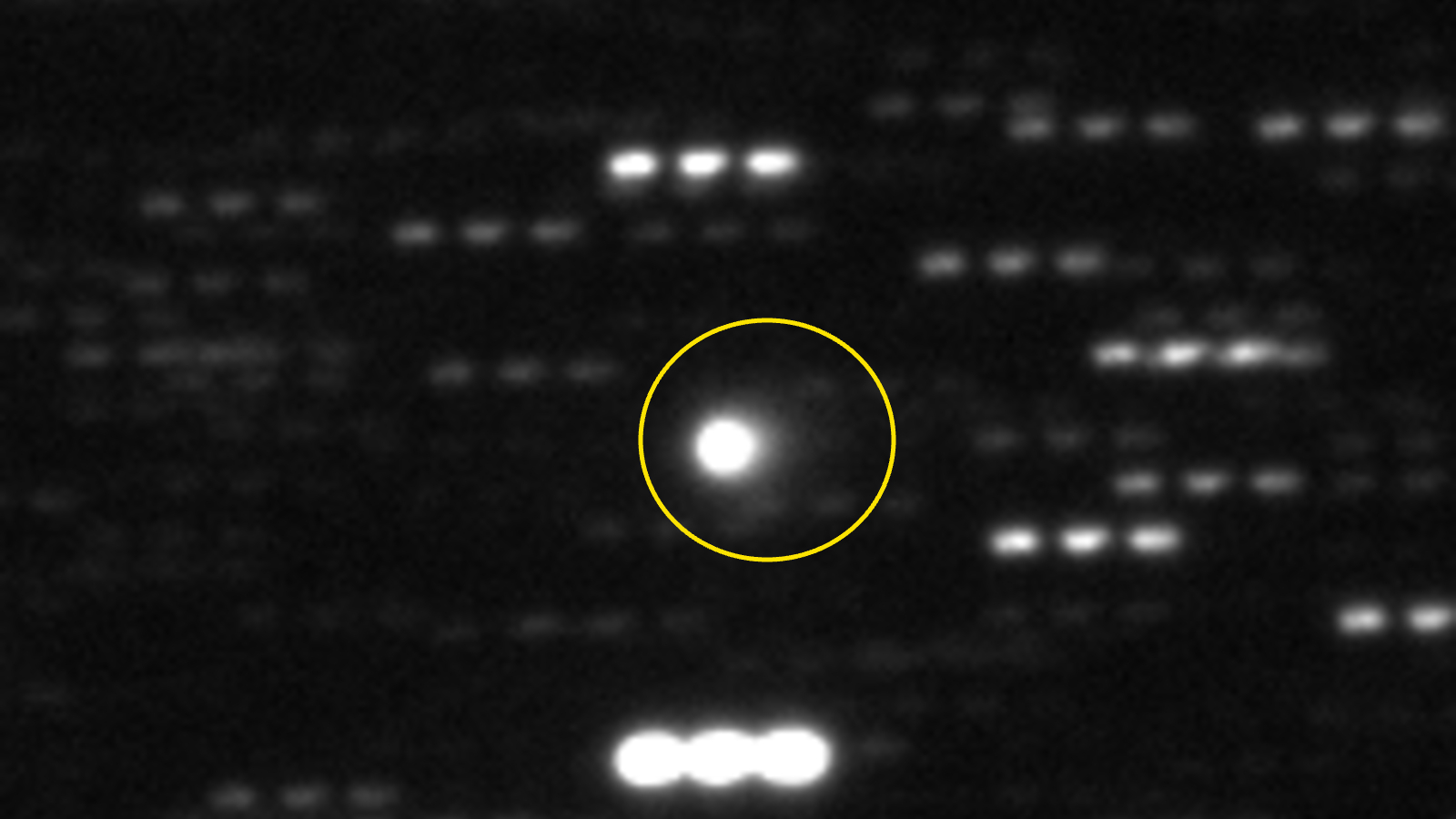
Comet 3I/ATLAS, an extraordinary interstellar visitor, is captivating scientists and the public alike as it journeys through our solar system. The object has not only intrigued experts but also prompted high-profile figures, including a reality TV star and a U.S. lawmaker, to speculate whether it could be an alien spacecraft. NASA, however, has decisively denied such claims, releasing new images to reinforce its natural origin.
Thomas Puzia, an astrophysicist who led the Chilean observatory team that discovered the comet, commented on the widespread interest, noting: "It's amazing to see how people are really engaged in the discussion." Yet he cautioned against jumping to conclusions, stating, "It's very dangerous and to a certain degree misleading to put speculations ahead of scientific process."
He clarified that "all the facts, without exception, point to a normal object coming from interstellar space," emphasizing that although 3I/ATLAS is remarkable, its characteristics can be explained through physics.
Since its detection in July, the comet has stirred excitement as only the third known interstellar object to travel through our solar system, following in the footsteps of the 2017 Oumuamua.
Harvard Professor Avi Loeb, known for advocating the possibility of extraterrestrial technology, has urged the scientific community to remain open-minded about 3I/ATLAS, suggesting, "We have to consider the possibility that it's technological because if it is then the implications for humanity will be huge." Nonetheless, NASA representatives maintain that the object is a comet. Amit Kshatriya, a senior NASA official, reiterated at a press briefing: "We want very much to find signs of life in the universe... but 3I/ATLAS is a comet."
Puzia underscored that scientific wonder should not be overshadowed by speculation, describing the comet as "an unprecedented insight into an extrasolar system, potentially billions of years older than our own solar system."
The comet remains a puzzle, particularly regarding its origin and composition. Scientists anticipate that observations in the coming weeks, as it approaches Earth, will provide valuable data. Puzia explained that these findings could shed light on "how planets might form" or "how life might develop around other stars in the Milky Way at various stages of galactic evolution."
NASA's Tom Statler shared his awe about the comet's significance: "We can't say this for sure, but the likelihood is it came from a solar system older than our own solar system itself. It's a window into the deep past, and so deep in the past that it predates even the formation of our Earth and our Sun."
Unlike previous interstellar objects that were only observed briefly, astronomers have had several months to study 3I/ATLAS, providing unprecedented opportunity for analysis. Darryl Seligman from Michigan State University expressed optimism about future discoveries, stating, "We should be finding many, many more of them every year," thanks to advances in detection technology.
Recommended For You

Four Danish Patients Receive Compensation Over Vision Loss Linked to Novo Nordisk Drugs
Jan 24, 2026
Bonifacio Tumang

Noah Cabreros Falls to Rory Turner by TKO in ONE Championship Debut
Jan 24, 2026
Filemon Cruzado

DOT Advances Airfare Transparency and Airport Upgrades to Boost Tourism
Jan 24, 2026
Fortunato Guevarra

Superkit Tour Heads to Thrilling Final Stage at Luisita Golf and Country Club
Jan 24, 2026
Filemon Cruzado